
Entomological Report 2026: Evolution of Mosquito Populations and Nuisance Levels
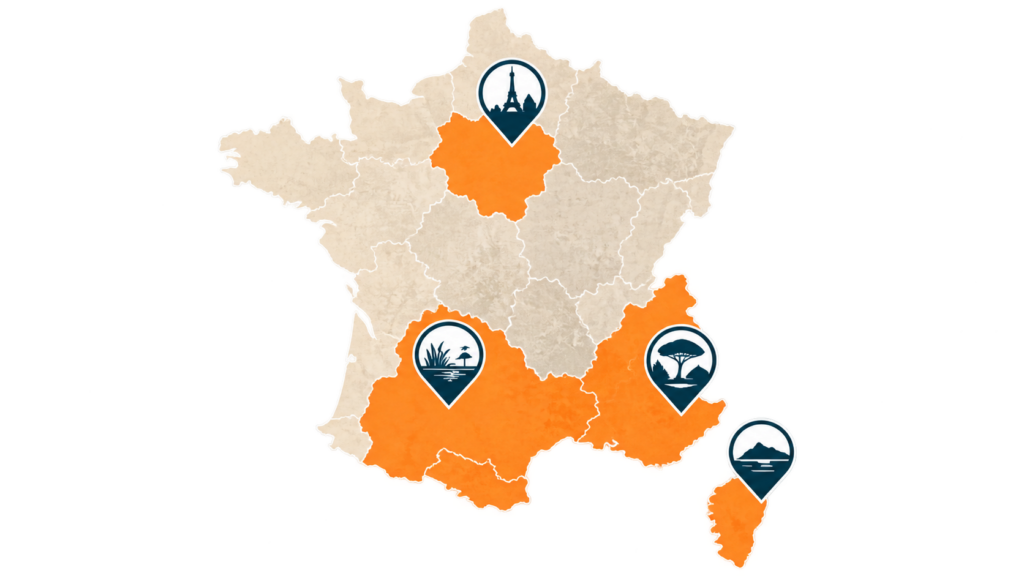
Paris and Île-de-France
La saison 2026 confirme l’extension et la densification du moustique-tigre en Île-de-France. Aedes albopictus is established in all eight departments of the Île-de-France region. Today, more than 82% of the region’s inhabitants live in municipalities where its presence is confirmed. It is progressively gaining new areas and establishing itself permanently closer to homes. This evolution results in increasing nuisance. September 2026 was thus marked by numerous reports of particularly significant nuisance levels, to the point of making certain uses of gardens, terraces, and outdoor spaces difficult or even impossible. This situation is characteristic of the tiger mosquito: it primarily bites during the day and remains in the immediate vicinity of its development site. Rising temperatures and periods of intense heat exacerbate the nuisance and contribute to its prolongation.
In newly affected areas, the establishment of Aedes albopictus becomes a real comfort issue, significantly degrading outdoor living conditions.
Occitanie
The 2026 season was particularly early. Mild temperatures combined with significant rainfall at the end of winter and beginning of spring favored the flooding of wetlands and caused emergences of rural mosquitoes as early as February and March. Populations of Aedes detritus and then Aedes caspius, characteristic of wetlands, thus generated locally almost unbearable nuisance from the beginning of the season. These species can emerge in very large numbers after their habitats are flooded and disperse towards inhabited areas, quickly making nearby gardens, terraces, and outdoor spaces uncomfortable. Aedes albopictus, more discreet due to high temperatures, saw a rebound at the end of summer. The year 2026 thus illustrates the evolution of a nuisance that can begin very early and persist for an increasingly long period, permanently degrading outdoor living conditions.
Provence-Alpes-Côte d’Azur
In Provence-Alpes-Côte d’Azur, the season was strongly marked by alternating periods of intense heat and rain. The dry period temporarily limited mosquito production. But the late summer flooding, combined with particularly favorable temperatures in September, intensified tiger mosquito activity in most urbanized areas, making the nuisance almost unbearable. For common mosquitoes (Culex pipiens), aggressiveness also increased during heat peaks. These conditions, combined with the persistence of high temperatures, exacerbated the nuisance and contributed to its prolongation, severely degrading the living comfort of residents.
Corsica
In Corsica, the 2026 season was marked by significant activity of marsh mosquitoes from the beginning of the season, particularly in the Porto-Vecchio sector, where vast wetlands provide particularly favorable habitats for their development. The flooding of these environments led to massive and synchronized emergences, generating strong nuisance in nearby inhabited areas. This nuisance then combined with that of the tiger mosquito, widely established in the island’s residential areas. Less present during intense heat, it saw a clear resurgence at the end of summer. The year 2026 thus illustrates the evolution of a nuisance that can appear very early and extend over an increasingly long period, permanently degrading outdoor living conditions.
There is a before and an after BioBelt. Our clients never go back
“We could no longer enjoy the terrace or the garden. Today we fully enjoy all our outdoor spaces, and that is a real pleasure.”
— Audrey Jorge Director of Mas de Pierre
“Afternoons and evenings were becoming hellish, and we had tried everything. Today we don't even worry about mosquitoes anymore. We have regained a freedom we thought was impossible.”
— Vanessa P.
“It is a system that is extremely effective, which works almost to perfection.”
— Antoine C.
“We could no longer enjoy the terrace or the garden. Today we fully enjoy all our outdoor spaces, and that is a real pleasure.”
— Eric B.